Peptide Therapy for Men Over 30: What Every Man Should Know
Written by Dr. Aren Nilsson, D.C. | Medically reviewed by Dr. Ann Drayton, M.D.


Peptide Therapy for Men Over 30: What Every Man Should Know
The second time I tore a patellar tendon, I was wrestling around with my roommate on the floor of our apartment at USF. Same knee as the year before, almost exactly. I just lay there thinking, not again.
The first rupture had already cost me my girlfriend, my job, and a semester of school. I dropped from 272 pounds to 210 in what felt like no time. And now I was back at zero.
Surgery and physical therapy helped. I'm genuinely grateful for both. But years later I was still carrying chronic pain that wasn't going anywhere. A friend in the performance space mentioned BPC-157 and TB-500. I was skeptical, maybe even a little dismissive. I'd been optimizing my health since I was fifteen, and I thought I had a pretty good handle on what worked. Peptides felt like a different category, one I hadn't seriously looked into yet.
I tried them anyway. Over the following months, the pain I'd been managing dropped by roughly 80 percent. That's my experience. I can't promise yours will look the same. But that's what sent me down this road, and it's why I ended up building a clinical practice around this work.
If you're a man over 30 and you've been curious about peptide therapy, this is the kind of conversation I wish someone had sat me down for earlier.
What Peptides Actually Are
Peptides are short chains of amino acids, the same building blocks that make up proteins. Your body produces them naturally. They function as signaling molecules, little messages that tell different systems what to do.
When you take a peptide therapeutically, you're essentially giving your body information it may have stopped generating efficiently on its own. That's a meaningful distinction from how most supplements work. A protein shake gives your body raw material. A peptide sends a signal.
As men age, some of those signals fade. Growth hormone output drops sharply after the late twenties. Recovery slows down. Inflammation takes longer to clear. Sleep architecture changes in ways that compound over time. Some of that is unavoidable. But some of it is physiological, and physiology can be addressed.
I wouldn't suggest starting any of this without blood work and a clinical conversation. That's not me being overly cautious; it's just how good medicine works. But for the right person, understanding what's available is worth the time.
BPC-157: Recovery and Gut Healing
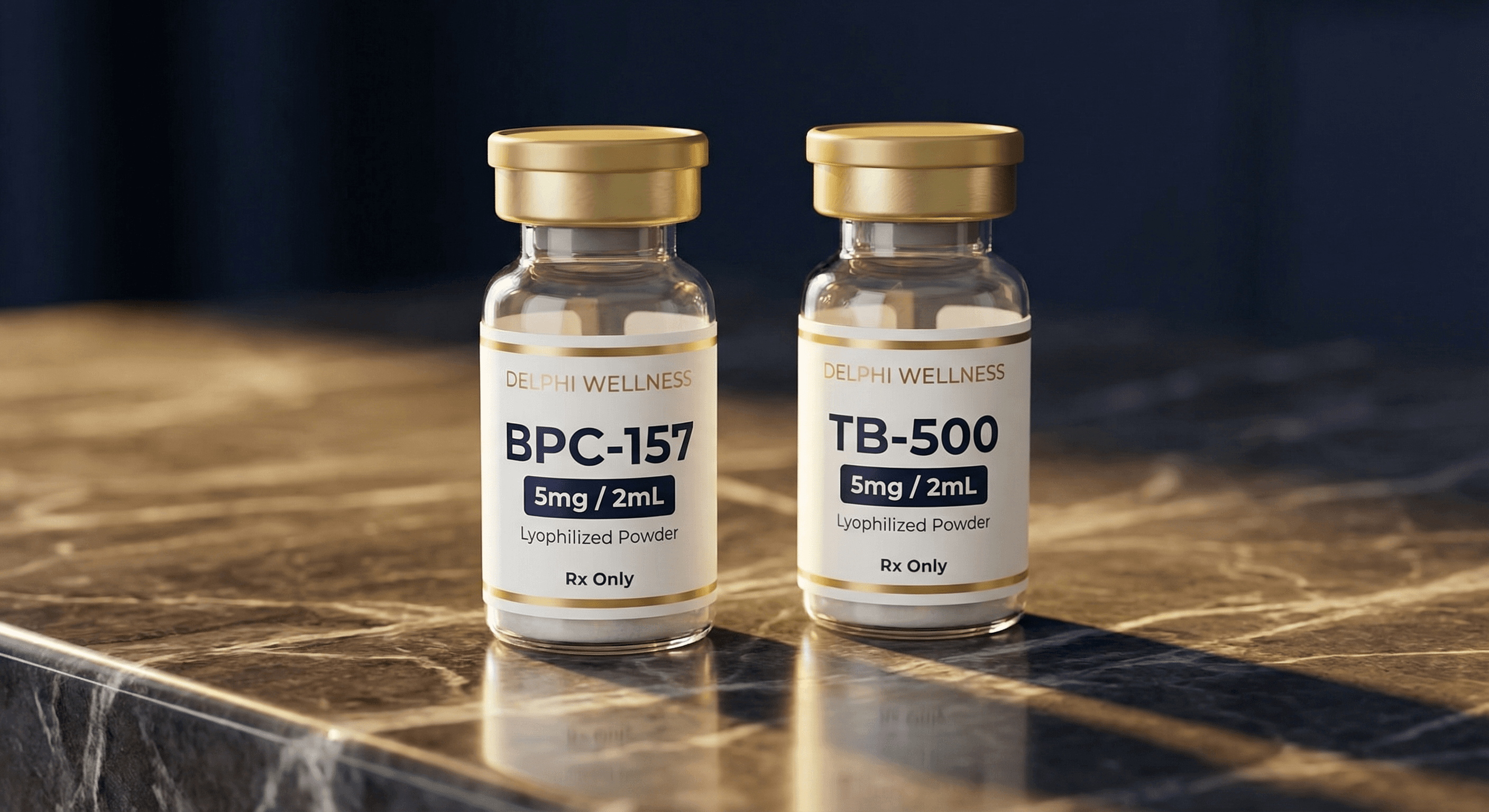
BPC-157 stands for Body Protection Compound 157. It's a peptide derived from a protein found naturally in human gastric juice, and it's among the most studied peptides for tissue repair and healing.
The preclinical research on BPC-157 is striking. In a study published in the Journal of Orthopaedic Research (Staresinic et al., 2006), researchers completely severed the quadriceps muscle in rats. The BPC-157 group regrew muscle fibers across the gap and regained walking function. In a separate study in Current Issues in Molecular Biology (Perovic et al., 2022), rats with compressed spinal cords and paralyzed tails recovered motor function after a single BPC-157 administration, even when given four days post-injury. And research in Surgery Today (Chang et al., 2008) showed functional recovery from severe crush injuries to the lower leg. These are animal studies, not human trials. But the consistency across dozens of peer-reviewed papers is hard to ignore.
This is the one I credit, alongside TB-500, for turning around my own recovery. I don't say that as a sales pitch. I say it because it's true, and because I know how many men are carrying injuries or chronic pain that conventional medicine has kind of shrugged at.
Something worth knowing: BPC-157 is also studied for gut healing. For men dealing with persistent digestive issues, including leaky gut or low-grade gut inflammation, this is a conversation that doesn't come up often enough. The gut connection is a real part of the research.
You can read more about how we approach BPC-157 at Delphi here.
TB-500: Systemic Recovery and Inflammation
TB-500 is a synthetic version of Thymosin Beta-4, a protein present in nearly every cell of the human body. It's often paired with BPC-157 because they work through different mechanisms and address different aspects of healing.
Where BPC-157 tends to be more localized, TB-500 has a more systemic character. It's associated with reduced systemic inflammation and improved flexibility. It also supports repair processes throughout the body in ways BPC-157 alone doesn't fully cover. In animal studies, it has shown promise for muscle healing and even cardiac tissue repair after injury.
I've found that men who carry a lot of accumulated physical wear, whether from years of hard training or a history of repetitive injuries, often respond well to this combination. The goal isn't to push past the body's signals. It's to give the body more of what it's already trying to do on its own.
CJC-1295 and Ipamorelin: Growth Hormone Optimization
As men move through their thirties, growth hormone (GH) output naturally declines. This shows up in body composition and recovery speed, but the most noticeable signal for most men is sleep quality and how they feel when they wake up.
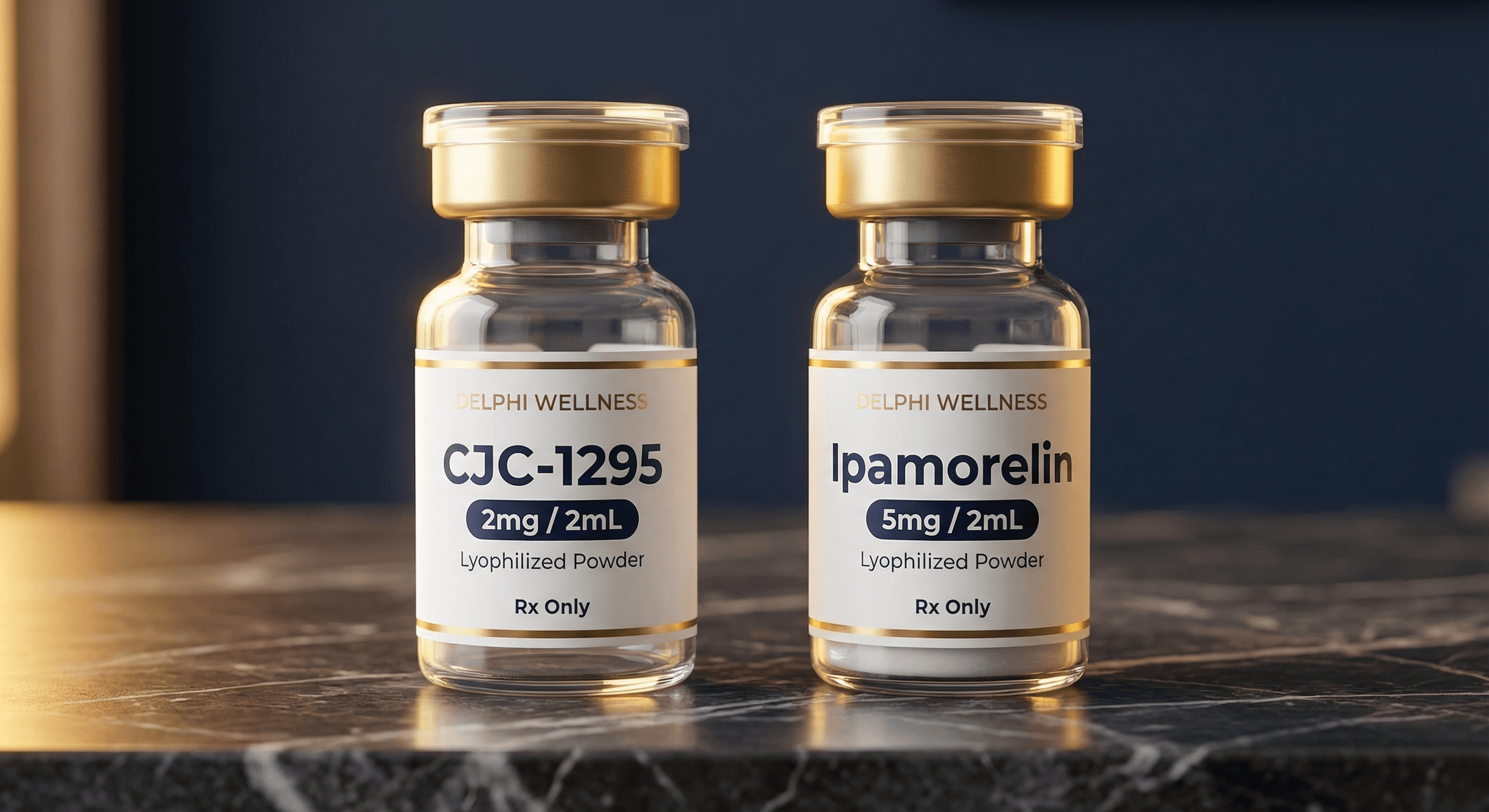
CJC-1295 is a growth hormone-releasing hormone analog. Ipamorelin is a growth hormone secretagogue. They work through different receptor pathways, which is why they're typically combined: CJC-1295 stimulates a sustained release of GH, while Ipamorelin amplifies the pulsatile release that naturally occurs during deep sleep.
For many men, the result is better sleep, faster recovery, and gradual improvements in body composition over time. These aren't overnight changes. Most men notice meaningful differences after eight to twelve weeks of consistent use.
I've seen this combination work particularly well for men in their late thirties and forties who are doing everything right on paper, eating well, getting to the gym consistently, but still feeling like something's missing. Sometimes the issue is downstream of GH output, and no amount of discipline fixes a signaling problem.
You can read a deeper look at how this combination works here.
Sermorelin: A Gentler Place to Start
Sermorelin was actually the first FDA-approved growth hormone-releasing peptide, approved in 1997 for children with GH deficiency before being studied in adults.
Like CJC-1295, it works by stimulating the pituitary to release growth hormone. Its shorter half-life means it acts more like the body's natural rhythms, which appeals to men who are newer to peptide therapy or who'd rather start at a lower intensity.
I've found Sermorelin works well for men whose primary concern is sleep quality and lean body mass over time, rather than aggressive optimization targets. It's worth asking about if you're curious about the growth hormone pathway but want to ease in.
Semaglutide and Tirzepatide: Metabolic Health
I want to talk about these two honestly, because they've gotten a lot of attention lately, some of it warranted and some of it overhyped.
Semaglutide is a GLP-1 receptor agonist. Tirzepatide is a dual GLP-1/GIP agonist. Both were originally developed for type 2 diabetes and later studied for metabolic health and weight management. They work by slowing gastric emptying and reducing appetite, while also improving insulin sensitivity. Tirzepatide also affects an additional gut hormone pathway, which is part of why its results in clinical trials have been particularly notable.
The weight loss data is real. A 2021 trial published in the New England Journal of Medicine (the STEP 1 trial) found that semaglutide produced an average weight reduction of nearly 15 percent of body weight in adults with obesity. Tirzepatide data has been comparable or better in some cohorts.
Here's what I want to say carefully: these are powerful medications that deserve real clinical oversight. The men who do best with them are also addressing the metabolic picture underneath the weight, not just looking for a shortcut. That means understanding your insulin sensitivity and your hormonal baseline before you start, and having someone review that data with you.
If you've been carrying extra weight despite eating reasonably and staying active, and you're also dealing with fatigue and low energy, this may be part of a larger metabolic conversation worth having. But it should be a conversation.
Why the Source of Your Peptides Matters
This is something I feel strongly about, and I'll tell you why.
The peptide market has a real quality-control problem. There are companies selling peptides labeled "for research use only," which is a legal workaround that means they're not intended for human use and they're not held to pharmaceutical manufacturing standards. Purity and actual dosage can vary significantly, and in some cases are simply unknown.
At Delphi, every peptide we prescribe comes from USA-based compounding pharmacies that operate under FDA oversight and follow cGMP, or Current Good Manufacturing Practice, standards. Pharmaceutical-grade compounds have verified purity and dosing. Grey-market products often don't.
I'm not judging anyone who's experimented with research peptides in the past. A lot of people have, and I understand why. But when you're working with a clinical protocol designed around specific health goals, you need to know what's in the vial. That's not a small thing.
How We Actually Work at Delphi
I want to give you a real picture of what working with us looks like.
Delphi is a telehealth practice serving all of Georgia. You don't need to drive to an office to get blood work reviewed and a protocol designed. Everything runs through video visits and secure messaging.
But telehealth doesn't mean lightweight oversight. Every protocol at Delphi starts with blood work. We want to see your baseline before recommending anything. Our prescriber is a licensed nurse practitioner, and our medical director is an MD. This isn't a med spa model where someone hands you a vial and sends you home. It's functional medicine practice, with clinical reasoning behind every decision we make.
If you're dealing with low testosterone alongside recovery or body composition concerns, there's often meaningful overlap between peptide therapy and testosterone therapy. You can learn more about how we approach that here.
Our full optimization framework, the Architect Protocol, covers how we structure these things together. You can find that here.
And if you want the specifics on what we offer and how to get started with peptides specifically, our peptide therapy services page has that.
Frequently Asked Questions
Is peptide therapy safe for men in their thirties?
For most healthy men, peptide therapy under clinical supervision carries a reasonable safety profile. The specific risk picture depends on which peptides you're using and your personal health history. Baseline labs help clarify things considerably. Starting without that information isn't something I'd recommend, but this isn't an inherently dangerous category of medicine when managed correctly.
Do I have to inject peptides?
Some peptides are administered subcutaneously, which means just under the skin with a small insulin-type needle. Others are available in oral or nasal formulations depending on the compound. At Delphi, we walk every patient through their administration options and make sure you're comfortable before anything starts.
How long before I notice results?
It depends on the peptide and what you're addressing. BPC-157 for injury recovery may show noticeable effects within four to eight weeks. CJC-1295 and Ipamorelin for sleep quality and body composition changes typically take eight to twelve weeks to show meaningful results. Semaglutide for weight management usually produces noticeable changes within the first four to six weeks. We set realistic expectations at the beginning of every protocol.
Can I use peptide therapy alongside TRT?
Yes, and I've found the combination to be quite effective for many men. Peptides and testosterone therapy address different systems, and in a well-designed protocol they can work well together. This is something we assess individually based on your labs and goals.
What makes Delphi different from other clinics offering peptides?
We start with blood work, not a checkout page. Every protocol is reviewed by our NP and MD. We source from licensed USA compounding pharmacies that meet pharmaceutical manufacturing standards. We're not trying to be the fastest or the cheapest option. We're trying to be the most careful one.
If any of this connects with where you are right now, I'd genuinely love to talk. A free discovery call is just a conversation, no obligation, no pressure. You can book one at delphiwellness.clinic. It's a chance to ask your questions, tell me what you're dealing with, and we'll figure out together whether this is worth pursuing.
I spent years working through a lot of this on my own, sometimes the hard way. I'm glad to share what I've learned.
Dr. Aren Nilsson, D.C.
Founder & Clinical Director
Dr. Aren Nilsson is the founder of Delphi Wellness, a physician-led telehealth practice specializing in hormone optimization, peptide therapy, and functional medicine for patients in Georgia.
Learn more about our teamRelated Articles

Ready to optimize your health?
Get your free consultation with our clinical team.
Get Your Free Consultation →