BPC-157: The Healing Peptide That Changed How I Think About Recovery
Written by Dr. Aren Nilsson, D.C. | Medically reviewed by Dr. Ann Drayton, M.D.


I ruptured my right patellar tendon longboarding across a university campus in 2014. Exactly one year later, to the day, I ruptured the left one wrestling with a roommate. Two catastrophic knee injuries. I went from 272 pounds of muscle to 210, lost my girlfriend, lost my job, and had to withdraw from school.
BPC-157 benefits are something I can talk about from firsthand experience, not just clinical literature. When I finally got access to this peptide years later, the reduction in chronic knee pain was around 80%. Not overnight. Not magic. But meaningful in a way that nothing else had been.
That personal experience is part of why peptide therapy became central to what we do at Delphi Wellness. And it's why I want to give you a clear, honest breakdown of what BPC-157 actually is, what it does, and who it's for.
What Is BPC-157?
BPC-157 stands for Body Protection Compound-157. It's a synthetic peptide, 15 amino acids long, derived from a protein naturally found in human gastric (stomach) juice. Your body already produces a version of this compound. The therapeutic form is a stabilized, concentrated version designed to amplify what your body does naturally when it's trying to heal.
Peptides are short chains of amino acids, smaller than proteins, that act as signaling molecules. They tell your cells what to do. BPC-157 specifically tells your body to ramp up its healing processes, and it does this through a few well-studied pathways.
How BPC-157 Works in Your Body
Three primary mechanisms drive BPC-157's healing effects:
Angiogenesis. BPC-157 promotes the formation of new blood vessels at injury sites. More blood vessels means better delivery of oxygen and nutrients to the damaged area, plus faster waste removal. This is one of the reasons injuries heal slowly in areas with poor blood supply, like tendons and ligaments. BPC-157 addresses that directly.
Nitric oxide release. The peptide triggers vasodilation, widening existing blood vessels to increase blood flow to the damaged area. Think of it as opening more lanes on the highway to get repair crews to the construction zone faster.
VEGF upregulation. Vascular endothelial growth factor is one of the body's primary signals for tissue repair. BPC-157 turns up the volume on this signal, accelerating the entire healing cascade.
What makes BPC-157 particularly interesting is that it works systemically. You don't necessarily have to inject it directly at the injury site for it to work, though local injection can enhance results for specific soft tissue injuries.
BPC-157 Benefits: What the Research Shows
The clinical evidence for BPC-157 spans multiple categories:
Musculoskeletal healing. This is where BPC-157 has the strongest body of evidence, and the specific studies are worth knowing about.
In one study published in the Journal of Orthopaedic Research (Staresinic et al., 2006), researchers completely transected the quadriceps muscle in rats. Cut it right through, 1 cm above the kneecap. The BPC-157 group regrew muscle fibers across the gap, regained walking function, and showed myofibril diameters comparable to healthy, uninjured muscle. No post-surgery leg contracture. The control group didn't recover.
Another study in Surgery Today (Chang et al., 2008) tested BPC-157 on severe crush injuries to the lower leg. The treated group recovered functional movement measured by the Tibial Function Index and Extensor Postural Thrust tests. Edema, hematoma, and contracture all improved significantly compared to controls.
For people dealing with chronic tendon pain, rotator cuff issues, knee injuries, or tennis elbow, this category of evidence is the strongest.
Gut healing. BPC-157 was originally isolated from gastric juice, and it has a particular affinity for the GI tract. Published research, including work in Current Pharmaceutical Design and the Journal of Physiology-Paris, has documented protective and healing effects on the gut lining. This makes it relevant for people dealing with intestinal permeability (leaky gut), ulcers, or inflammatory bowel conditions. If you're working with a functional medicine provider on gut health, BPC-157 can be a useful addition to the protocol.
Anti-inflammatory effects. Beyond just healing tissue, BPC-157 actively reduces inflammation at the cellular level. This is distinct from simply masking pain the way NSAIDs do. The peptide is addressing the inflammatory cascade itself.
Neuroprotection and spinal cord recovery. This is where the research gets particularly striking. A 2022 study in Current Issues in Molecular Biology (Perovic et al., 2022) compressed the spinal cords of rats, resulting in complete tail paralysis. A single administration of BPC-157, given as late as four days after injury, produced marked functional recovery. The peptide attenuated spinal cord hematoma and swelling, reduced edema, and prevented demyelination. The researchers observed restored motor function in a scenario where the control group remained paralyzed.
Earlier animal studies have also indicated protective effects on nerve tissue more broadly, with implications for peripheral nerve injury recovery. Human clinical data in this area is still limited, but the preclinical signal is strong.
Organ protection. Animal models have demonstrated protective effects on liver, kidney, and heart tissue. These findings are preliminary in terms of human application, but they point to BPC-157 having broad protective properties. Human trials are needed before drawing firm conclusions here.
A note on the evidence: The studies I've cited above are preclinical, meaning they were conducted in animal models. We don't yet have large-scale human clinical trials for BPC-157. I want to be straightforward about that. But the mechanistic evidence across dozens of peer-reviewed papers is consistent, and it aligns with the clinical observations I've seen working with patients. The gap between animal research and human experience is real, but so are the results.
My Experience: Bilateral Patellar Tendon Ruptures
I want to be specific about my own results because I think it matters when your doctor has actually used the thing they're recommending.
After both patellar tendons ruptured (right in 2014, left in 2015), I went through surgical repair and standard physical therapy. The recovery was long and incomplete. For years, I dealt with chronic pain, stiffness, and a lingering sense that my knees were never going to be what they were before.
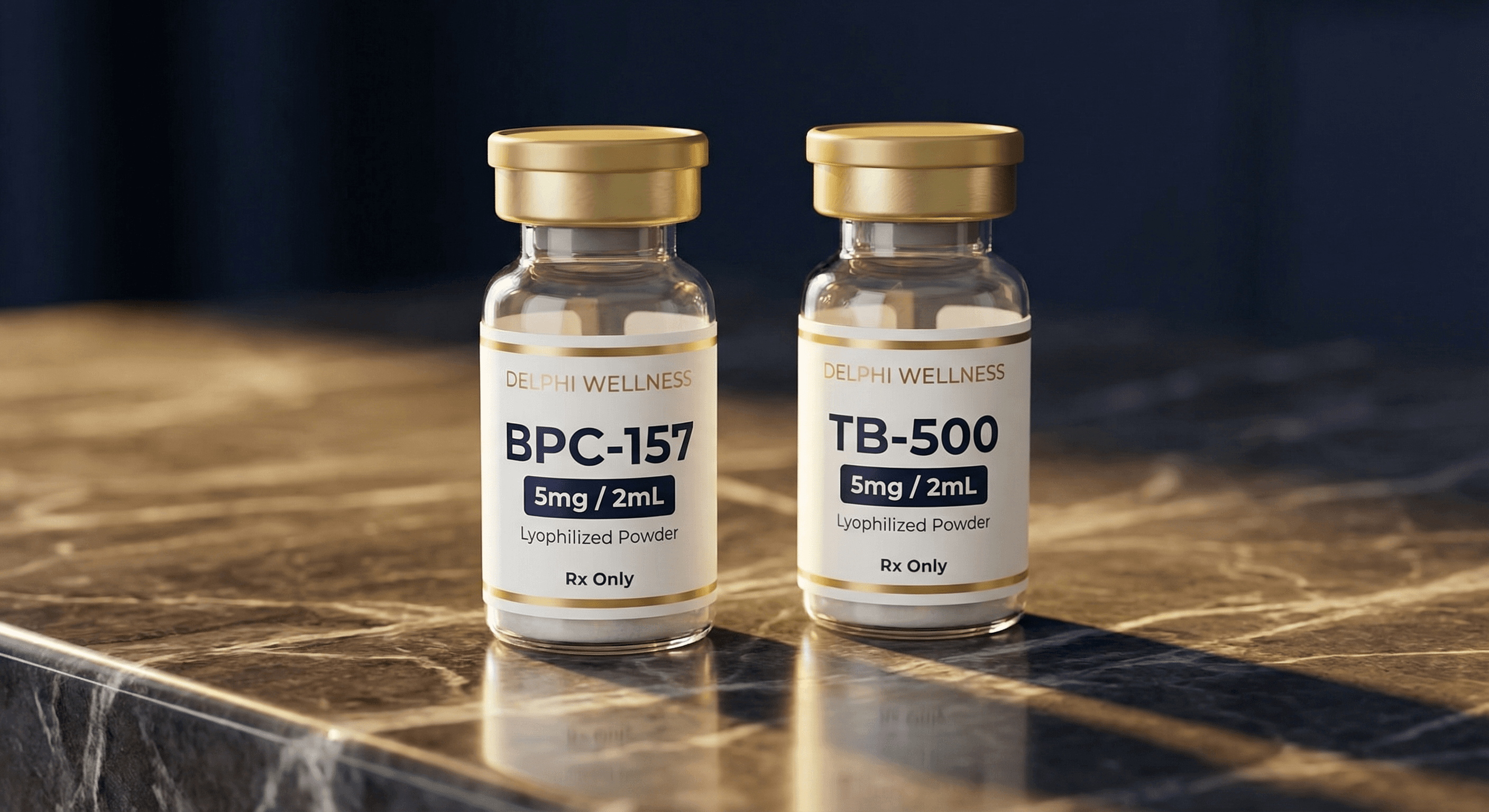
When I started BPC-157 combined with TB-500 (we call this the "Wolverine Stack" in clinical circles), the change was gradual but undeniable. Over several weeks, the baseline pain dropped significantly. I'd estimate around 80% reduction in the chronic discomfort I'd been living with. Range of motion improved. The feeling of instability diminished.
Was it a cure? No. I'm not going to tell you peptides fix everything. But the improvement in quality of life was substantial enough that it changed how I approach healing protocols for my patients here at Delphi Wellness, and for anyone we see across Georgia through our telehealth services.
BPC-157 Dosing: What to Expect
Standard BPC-157 dosing follows a straightforward protocol:
- Dose: 200-500 mcg per injection, prescribed based on your individual labs and the severity of your condition
- Frequency: Typically twice daily (morning and evening)
- Route: Subcutaneous injection (small insulin needle, just under the skin)
- Location: At or near the injury site for musculoskeletal issues, or abdominal for systemic/gut healing
- Duration: Typically 4-12 weeks depending on the injury
The peptide comes as a lyophilized (freeze-dried) powder that you reconstitute with bacteriostatic water. Once mixed, it's stored in the refrigerator and used within about 4 weeks. The half-life is approximately 4 hours, which is why twice-daily dosing is standard.
Most people see initial improvement within 2-4 weeks. Some report feeling better within the first week, but I always tell patients: even if you feel dramatically better early, continue the full protocol. The tissue is still stabilizing, and cutting short can lead to re-injury.
Important: BPC-157 should only be used under clinical supervision, sourced from a USA-compounded, pharmaceutical-grade compounding pharmacy with a prescription. The online peptide market is full of products with questionable purity and sequencing. This isn't something to cut corners on. At Delphi Wellness, we work exclusively with FDA-registered compounding pharmacies to ensure what you're getting is what the label says.
BPC-157 Side Effects
This is one of the areas where BPC-157 stands out from conventional treatments. The side effect profile is remarkably mild:
- Injection site irritation: Mild redness or bruising at the injection site. Rotating injection locations helps.
- Mild nausea: Rare, usually transient.
- That's essentially it for the vast majority of users at standard doses.
Compare that to the side effect list of NSAIDs (stomach ulcers, kidney damage, cardiovascular risk with long-term use) or corticosteroid injections (tissue degradation, blood sugar spikes, immune suppression), and you start to see why peptide therapy is gaining clinical attention.
Who should avoid BPC-157: If you have active cancer, are pregnant or nursing, or have severely impaired kidney function, peptide therapy needs careful medical oversight. Competitive athletes should know that BPC-157 is on the WADA banned substance list (S0 category: unapproved substances).
BPC-157 and TB-500: The Wolverine Stack
I mentioned this combination earlier because it's worth its own section. TB-500 (a fragment of Thymosin Beta-4) works through different but complementary mechanisms to BPC-157:
- BPC-157 drives angiogenesis and VEGF (new blood vessels, growth factors)
- TB-500 drives actin upregulation (cell structure restoration and repair)
- BPC-157 is stronger for gut healing
- TB-500 is stronger for muscle and heart tissue
When you combine them, you're attacking tissue repair from two angles simultaneously. The nickname "Wolverine Stack" isn't an exaggeration of the clinical intent: it's about giving your body every available signal to heal as fast as it can.
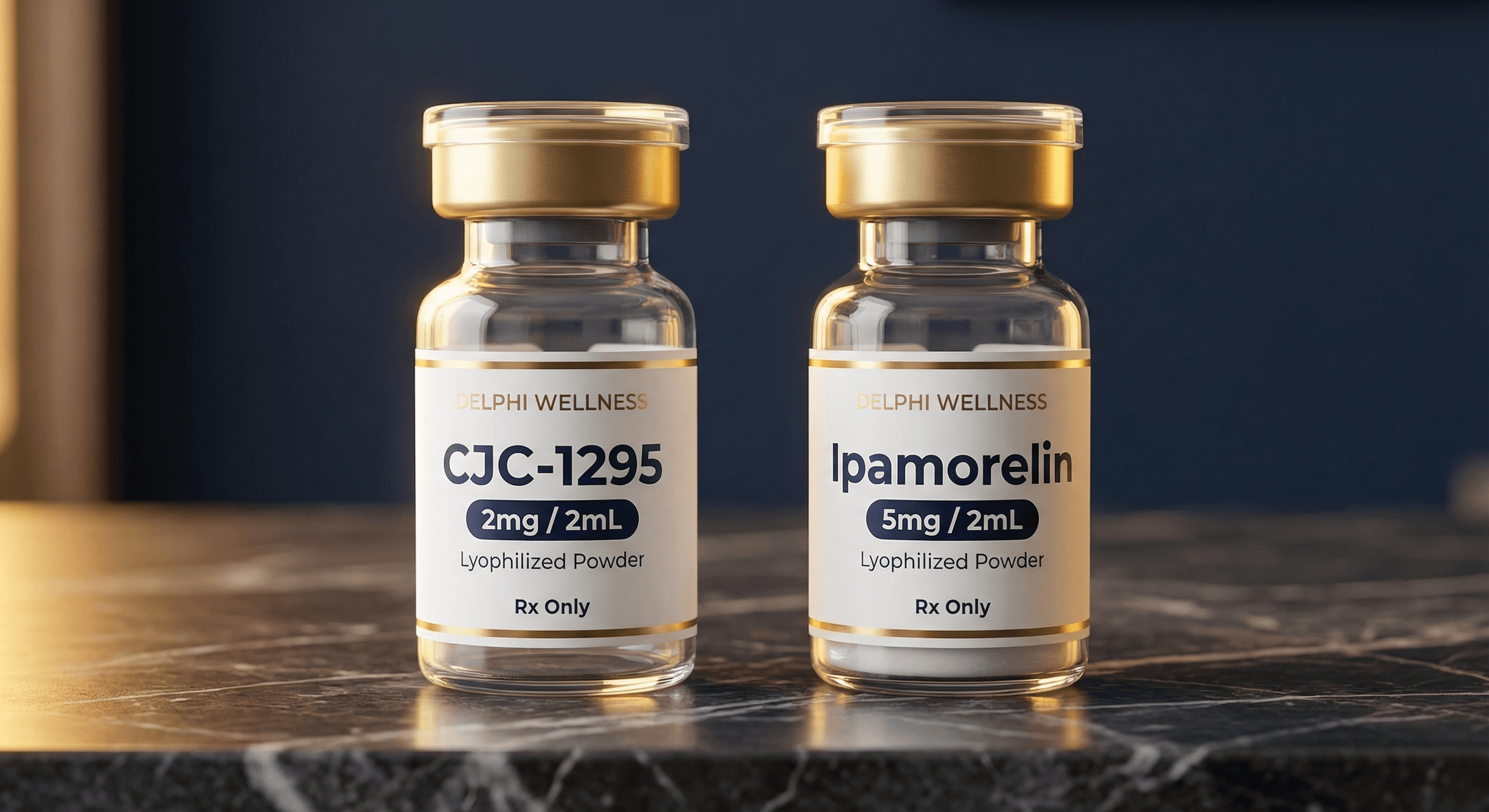
A typical combined protocol runs BPC-157 at 200-500 mcg twice daily with TB-500 at 2-2.5 mg once daily, for up to 12 weeks. For severe or complex injuries, we can add growth hormone secretagogues and GHK-Cu (a copper peptide) to create what's called the full Wolverine Healing Protocol. But for most people, the BPC-157 and TB-500 combination is the sweet spot.
Is BPC-157 Right for You?
BPC-157 tends to work best for people dealing with:
- Chronic tendon or ligament injuries that haven't responded well to conventional treatment
- Post-surgical recovery (once cleared by your surgeon)
- Gut health issues, especially leaky gut or chronic inflammation
- General injury recovery where you want to accelerate the timeline
- Chronic joint pain from wear-and-tear or old injuries
It's not a replacement for proper rehabilitation, good nutrition, sleep, or exercise. Peptides work synergistically with a healthy foundation. If your hormones are off, your diet is poor, and you're not sleeping, BPC-157 alone won't fix the problem. That's why at Delphi Wellness, peptide therapy is part of a broader optimization approach, not a standalone fix.
If you're in Atlanta or anywhere in Georgia and you've been dealing with a stubborn injury or chronic pain that isn't responding to what you've tried, BPC-157 might be worth a conversation. I've been where you are with my knees, and I know what it feels like when something finally moves the needle.
We offer peptide therapy consultations through our telehealth platform. You don't have to drive anywhere, and we'll review your history, your labs, and figure out if this is the right fit. Schedule a consultation and let's talk about it.
FAQ
How long does it take for BPC-157 to work?
Most people notice initial improvement within 2-4 weeks of consistent use. Some report changes within the first week. Full healing protocols typically run 4-12 weeks depending on the severity and type of injury. Even if you feel better quickly, finishing the full protocol is important because tissue stabilization takes longer than pain reduction.
Is BPC-157 FDA approved?
BPC-157 is not currently FDA approved for any specific indication. It's available through compounding pharmacies by prescription. This is common for peptides used in functional and regenerative medicine. The research base is substantial (primarily animal studies with growing clinical experience), and the safety profile is well-documented. At Delphi Wellness, we source all peptides from FDA-registered compounding pharmacies.
Can I take BPC-157 orally instead of injecting?
Yes, oral BPC-157 is an option, particularly for gut-related conditions where direct contact with the GI tract is beneficial. For musculoskeletal injuries, subcutaneous injection is generally preferred because it allows the peptide to reach systemic circulation more efficiently. Some providers use both routes simultaneously for patients dealing with both gut and musculoskeletal issues.
What's the difference between BPC-157 and TB-500?
Both are healing peptides, but they work through different mechanisms. BPC-157 primarily drives angiogenesis (new blood vessel formation) and VEGF upregulation. TB-500 primarily drives actin upregulation, which restores cell structure. BPC-157 is considered superior for gut healing, while TB-500 excels with muscle and soft tissue repair. They're often combined in what's called the "Wolverine Stack" for maximum healing effect.
How much does BPC-157 therapy cost?
Costs vary depending on the protocol, duration, and whether you're combining it with other peptides. At Delphi Wellness, peptide therapy programs are customized to your specific situation. We'll give you a clear picture of costs during your initial consultation. Most peptide therapy is not covered by insurance, but many patients find the investment worthwhile compared to the ongoing costs of managing chronic pain with conventional approaches.
Dr. Aren Nilsson, D.C.
Founder & Clinical Director
Dr. Aren Nilsson is the founder of Delphi Wellness, a physician-led telehealth practice specializing in hormone optimization, peptide therapy, and functional medicine for patients in Georgia.
Learn more about our teamRelated Articles

Ready to optimize your health?
Get your free consultation with our clinical team.
Get Your Free Consultation →