Best Atlanta Peptide Clinics: A Doctor's Guide
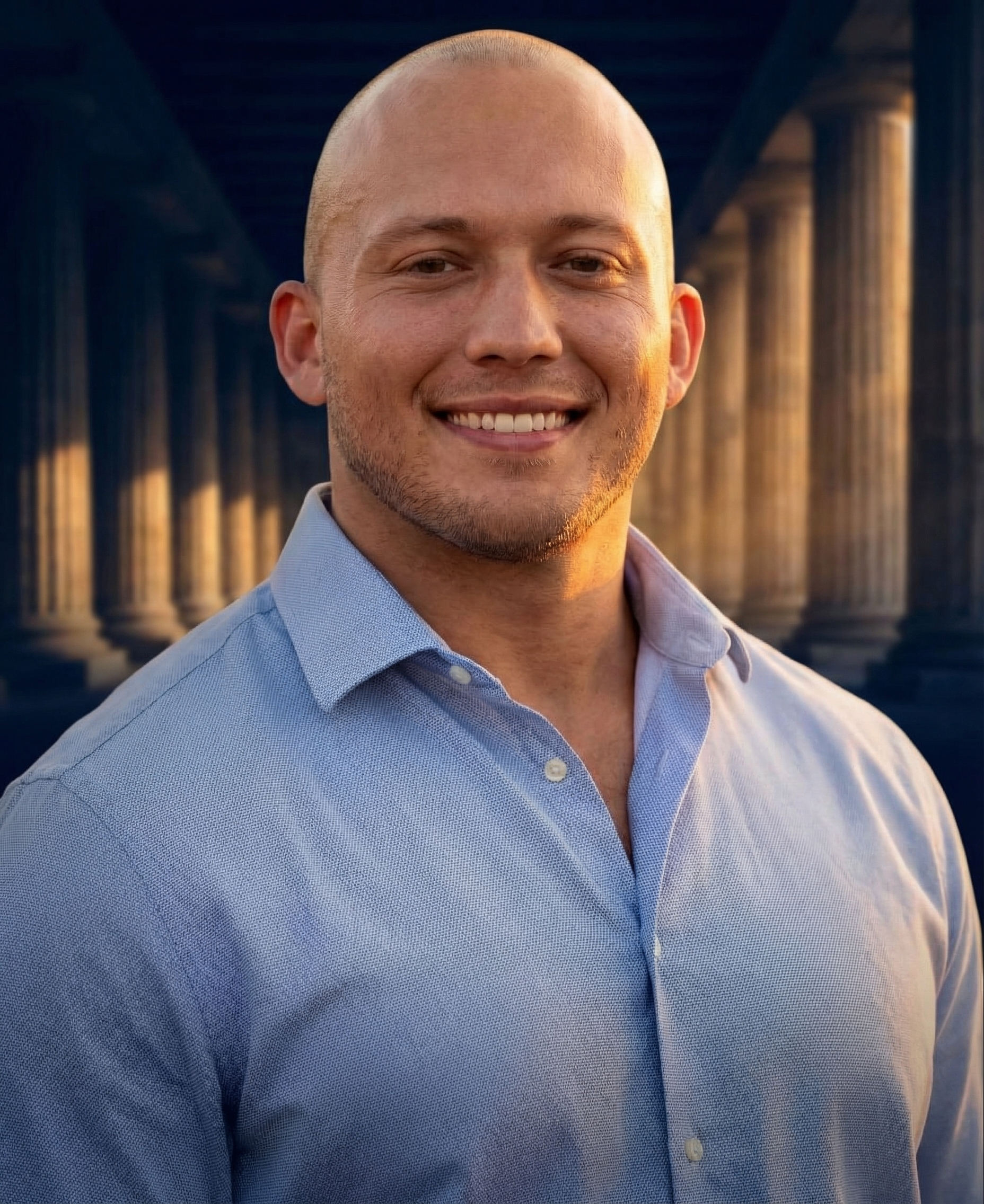
Written by Dr. Aren Nilsson, D.C. | Medically reviewed by Dr. Ann Drayton, M.D.
Best Atlanta Peptide Clinics: A Doctor's Guide
You're sitting at your computer. Your knee hurts and your sleep is broken. You keep hearing about BPC-157 or CJC-1295. So you type "peptide therapy Atlanta" into your search bar.
What comes back is a flood of ads. You see anti-aging spas mixed in with supplement shops and clinics that all blur together. It's overwhelming.
I know exactly how this feels. Years ago, I suffered bilateral patellar tendon ruptures. I lost my job, had to withdraw from school, and my body was basically failing. I spent hours trying to figure out how to heal, which is how I found peptides. But I had to figure out who was legitimate and who was just pushing product. Rough.
The truth is that the peptide market in Atlanta is crowded right now. Many places are adding peptides to their menu because they are popular. Popularity does not equal clinical competence.
If you want to do this safely and effectively, you need to know exactly what to look for.
What to Look For in a Peptide Clinic
When you are evaluating a clinic for peptide therapy, you have to look past the marketing. Here are the specific criteria you should use to judge a practice.
USA-Compounded vs. Research Grade Peptides
This is the biggest differentiator. It separates the real medical clinics from the dangerous ones.
Most cheap clinics or online shops sell "research grade" peptides. These are strictly for laboratory use. They lack sterility testing. They're not tested for endotoxins or heavy metals. Injecting research chemicals into your body is a massive risk. You have no idea what is actually in that vial.
A legitimate clinic only uses USA 503A compounding pharmacies. These facilities are regulated by state and federal pharmacy boards. The peptides are sterile and made specifically for human use. If a clinic can't tell you exactly which pharmacy compounds their peptides, walk away. There's no excuse for cutting corners on medication quality.
Real Physician Oversight
Peptides are powerful signaling molecules. They bind to specific cellular receptors to produce physiological effects. This requires serious medical supervision.
You want to see an MD or DO involved in the practice. Some clinics are run entirely by NPs without any physician involvement. While NPs are excellent clinicians, complex hormone and peptide cases need a collaborative medical team. You need a doctor reviewing protocols and catching things a solo provider might miss. That matters.
Custom Protocols vs. Cookie-Cutter Programs
A good clinic looks at your specific physiology first. They don't just hand you a menu of peptides to choose from.
Let's look at growth hormone secretagogues. These peptides stimulate your pituitary gland to release endogenous growth hormone. This is much more physiological than taking exogenous human growth hormone. A cookie-cutter clinic might just hand everyone Sermorelin because it is easy.
A clinical practice looks deeper. We might use a combination of CJC-1295 (without DAC) and Ipamorelin. Ipamorelin is a selective ghrelin receptor agonist. It stimulates a natural, pulsatile release of growth hormone without causing a massive spike in cortisol or prolactin. This is a very specific clinical decision based on your lab work and your symptoms. You won't get this level of detail at a volume-based clinic. They don't have the time.
Transparent Pricing
Watch out for the "call for pricing" trap.
Many clinics hide their costs until they get you on the phone. Then they hit you with high-pressure sales tactics. You should know what you are paying for the medical consultation and the medication itself. A good clinic respects you enough to be clear about money upfront. If they hide their prices, they are probably hiding other things too.
Provider Credentials and Specific Training
Prescribing peptides is not covered in standard medical school. It requires dedicated post-graduate study.
Ask where the providers learned their peptide protocols. Do they understand the difference between MC4R agonists like Bremelanotide and healing peptides like BPC-157? Do they know how to cycle peptides to prevent receptor downregulation? Many providers take a weekend course and start prescribing. If the provider can't explain the mechanism of action in plain English, they shouldn't be prescribing it to you.
Strict Lab Work Requirements
Clinics that skip labs are red flags.
If you are taking a growth hormone secretagogue like CJC-1295 and Ipamorelin, we have to monitor your IGF-1 levels. We want them between 200 and 300 ng/mL. Pushing growth hormone pathways without checking labs can cause insulin resistance or water retention. A real clinic insists on blood work before starting and requires follow-up labs to track your progress. Blood work is the only way to know what is happening inside your body.
Scheduled Follow-Up Cadence
You shouldn't be handed a vial and sent on your way. You need a scheduled follow-up to check your physiological response. If you are using BPC-157 and TB-500 for tissue repair, we need to know if your inflammation is actually decreasing. The clinic should be checking in with you regularly to adjust the dose or change the protocol.
An Honest Comparison of Atlanta Clinic Types
When you search for peptide therapy Atlanta, you will find four main types of businesses. I won't name specific competitors. I'll just explain the categories so you can spot them.
Volume-Based TRT and Weight Loss Clinics
These places treat low testosterone and prescribe weight loss medications all day long. They operate on volume. They get as many patients through the door as possible to maximize profit.
They often add peptides as an afterthought to increase revenue. The protocols are usually generic. You'll likely see a different provider every time you go in. The focus is on moving patients through quickly, not digging into why something is off. They're fine for basic needs, but they lack the depth for complex optimization.
Med Spas
These clinics focus on aesthetics. They might offer BPC-157 alongside Botox and laser hair removal.
The medical oversight here is usually thin. They treat peptides like cosmetic supplements rather than targeted medical therapies. The staff may not have the clinical depth to manage complex physiological responses or interpret detailed lab work. You want a medical clinic handling your systemic health.
Integrative Medicine Practices
These are usually very good clinical environments. They look at the whole body. They understand functional medicine.
The downside is access. They often require expensive in-office visits. They usually charge high concierge fees just to get in the door. You might wait months for an appointment. Then you have to fight Atlanta traffic to get there. The care is good, but the friction is high.
Telehealth-First Concierge Models
This is the category Delphi Wellness falls into. It combines the medical depth of an integrative practice with the convenience of telehealth.
You get real lab analysis and custom protocols built around your physiology. But you do not have to sit in a waiting room. We handle the medical care via video calls. The pharmacy ships the medication directly to you. It's a modern approach to specialized medicine.
What Delphi Does Differently
I built Delphi Wellness because I was tired of seeing patients get poor care. I wanted to build the clinic I wish existed when my knees failed. Here is exactly how we operate.
USA 503A Compounded Peptides
We only use regulated 503A pharmacies like VPI Compounding. Everything is sterile and rigorously tested. We never touch research chemicals. Your safety comes first. We want you to feel confident in every injection.
Collaborative Medical Oversight
Our clinical team is led by Dr. Ann Drayton, an experienced MD with over 30 years in practice. She works directly alongside Kerrie Reynolds, our prescribing NP-C. This collaborative approach means you get the benefit of multiple medical perspectives. We review cases together. We double-check each other. It's a safer, more effective way to practice medicine.
The Functional Medicine Lens
We don't prescribe peptides in a vacuum. Peptides work best as adjuncts to a solid physiological foundation.
If you want BPC-157 for a joint injury, we are also going to look at your systemic inflammation markers. If you want Sermorelin for recovery, we are going to look at your sleep and baseline hormones. We evaluate your metabolic markers and your testosterone levels. We look for severely low testosterone because ignoring that will blunt the effects of any peptide. That's a complete view of your health.
Peptide Credits Built Into Your Membership
Here is something most clinics do not offer. At Delphi, our Tier 2 and Tier 3 memberships include peptide credits every month.
Think about it this way. If you are doing peptide therapy, you are ordering peptides every month regardless. At most clinics, you pay your consultation fee, and then you pay separately for the medication. Two bills, every single month.
With our membership model, peptide credits are already built in. You are going to be getting peptides anyway. You might as well be getting them included in your plan rather than paying twice. It's a straightforward way to make ongoing therapy more affordable without cutting corners on quality.
Transparent Pricing
Beyond the included credits, we operate on a membership model with clear tiers. You know exactly what the medical care costs every month. There are no hidden fees. There is no high-pressure sales pitch. We just want to do good work.
Georgia Telehealth
We handle everything via telemedicine. You get your labs drawn locally at a time that works for you. We review them on a secure video call. The pharmacy ships the medication directly to your door in a cold pack. You get high-level care without leaving your house. No traffic. No waiting rooms.
The Peptides We Actually Use
We don't offer a massive menu of experimental compounds. We focus on peptides with strong clinical evidence and clear safety profiles.
BPC-157 (Body Protection Compound)
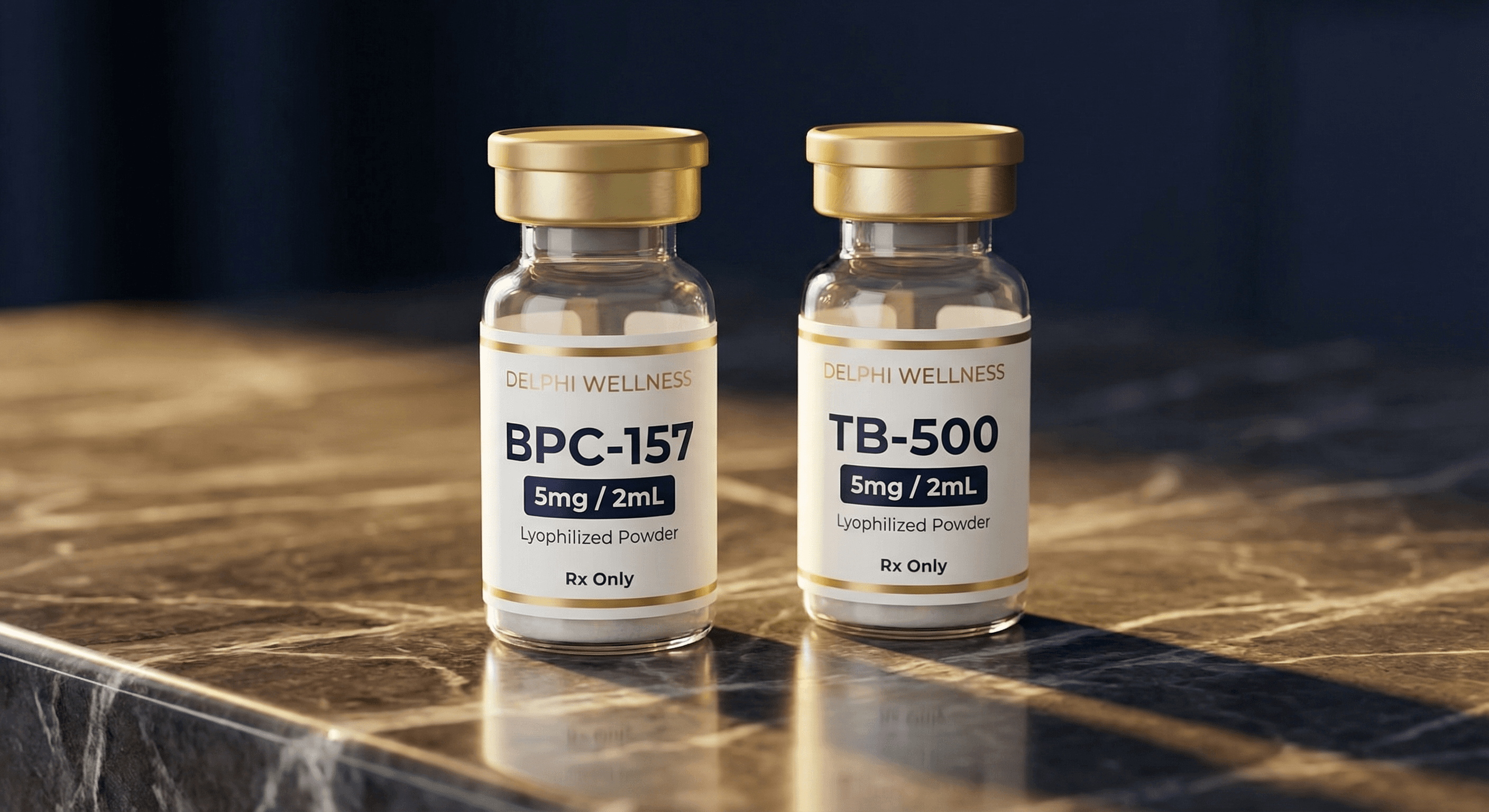
This is the most versatile healing peptide available. It promotes tendon repair and acts as a potent anti-inflammatory. It works by upregulating vascular endothelial growth factor. This stimulates angiogenesis, which is the creation of new blood vessels. More blood flow means faster healing. It's effective for musculoskeletal injuries.
TB-500 (Thymosin Beta-4)
This peptide is excellent for muscle repair and wound healing. It works by upregulating actin, a vital cellular protein critical for muscle contraction and cell mobility. We often stack TB-500 with BPC-157. This combination is synergistic. It tackles inflammation and tissue repair simultaneously.
CJC-1295 and Ipamorelin
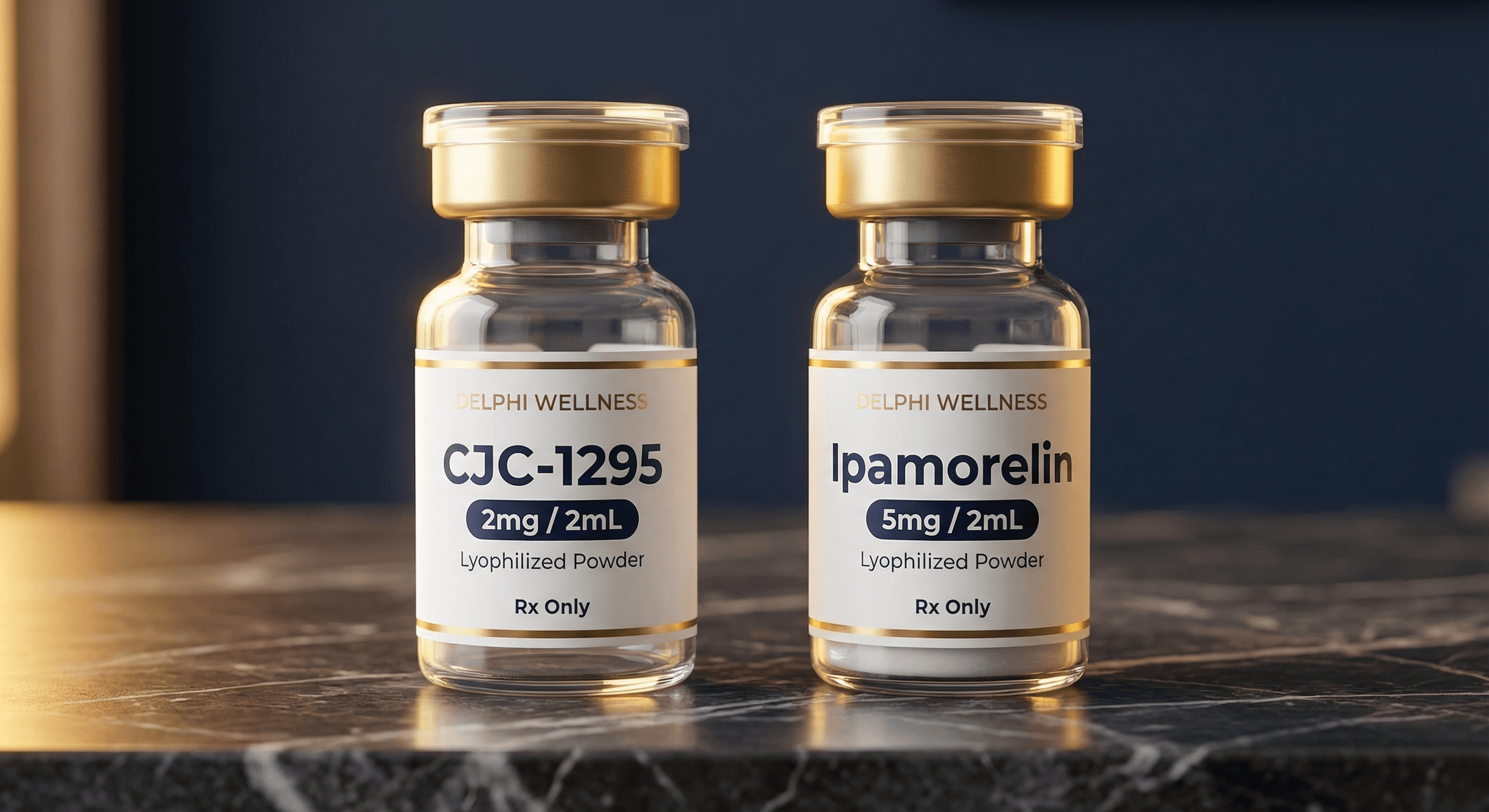
This is our preferred combination for growth hormone optimization. CJC-1295 is a growth hormone-releasing hormone analogue. Ipamorelin is a selective ghrelin receptor agonist. Together, they stimulate a sustained, physiological pulse of growth hormone from your pituitary gland. They improve sleep and help optimize body composition. Because Ipamorelin is selective, it avoids the cortisol spikes seen with older peptides.
Frequently Asked Questions
Are peptides legal in Georgia?
Yes. When prescribed by a licensed medical provider and dispensed by a licensed compounding pharmacy, peptides like Sermorelin, Ipamorelin, and BPC-157 are completely legal.
How much does peptide therapy cost in Atlanta?
It depends entirely on the specific peptide and the clinic structure. Some clinics mark up the medication heavily. A reputable clinic will separate the cost of medical care from the cost of the medication. Expect to pay a few hundred dollars a month for quality compounded peptides, plus the cost of your medical oversight.
Do I need a prescription for BPC-157?
Yes. To get pharmaceutical-grade BPC-157, you need a prescription from a licensed medical provider. Buying it online without a prescription means you are getting unregulated research chemicals.
What is the difference between research peptides and prescription peptides?
Research peptides are explicitly labeled for laboratory use only. They're not tested for sterility or safety in humans. Prescription peptides are manufactured in regulated 503A or 503B compounding pharmacies. They undergo strict testing to ensure they are safe for human injection.
How long does peptide therapy take to work?
It varies based on the peptide and your individual biology. BPC-157 can often show effects on joint pain within a few weeks. Growth hormone secretagogues like CJC-1295 and Ipamorelin usually take three to six months to show full benefits for body composition and sleep quality.
Can I do peptide therapy through telehealth?
Yes. In Georgia, we can establish care, order your lab work, and manage your peptide protocols entirely through telehealth. It's safe and convenient.
Let's Figure This Out
You don't have to guess your way through this. You don't have to risk your health on unregulated online shops.
If you want to do this right, you need a medical team that understands the science and respects your physiology. We can look at your blood work, talk about your goals, and build a plan that actually makes sense.
If this sounds like what you are looking for, I would love to talk about it.
Book a free consultation with me here. You can also learn more about our approach here.
Dr. Aren Nilsson, D.C.
Founder & Clinical Director
Dr. Aren Nilsson is the founder of Delphi Wellness, a physician-led telehealth practice specializing in hormone optimization, peptide therapy, and functional medicine for patients in Georgia.
Learn more about our teamRelated Articles


Ready to optimize your health?
Get your free consultation with our clinical team.
Get Your Free Consultation →