CJC-1295 and Ipamorelin: The Growth Hormone Peptide Stack Explained
Written by Dr. Aren Nilsson, D.C. | Medically reviewed by Dr. Ann Drayton, M.D.

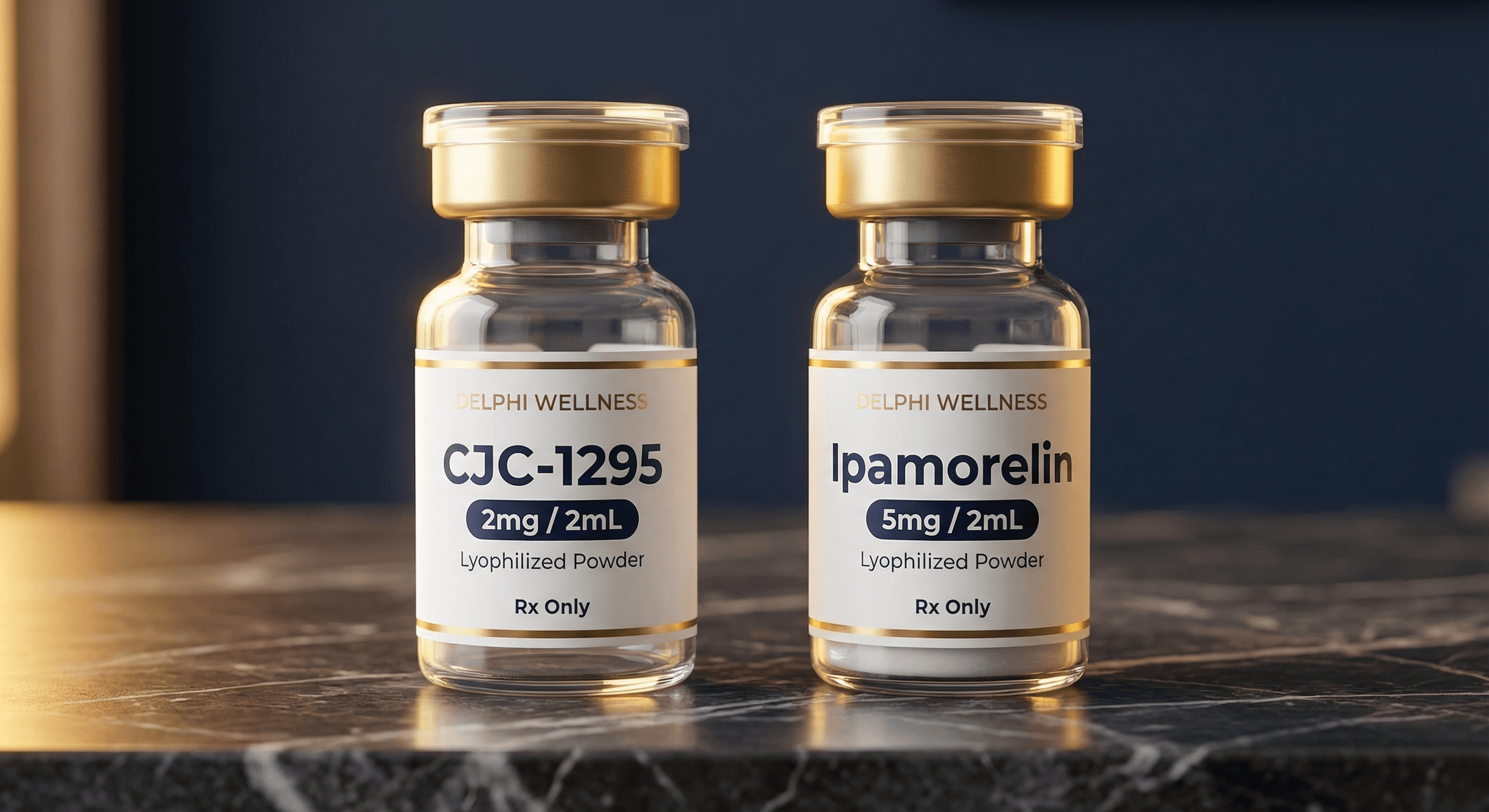
CJC-1295 and Ipamorelin is the most commonly prescribed growth hormone peptide combination in clinical practice right now, and for good reason. It works by stimulating your body's own pituitary gland to produce and release more growth hormone, rather than injecting synthetic HGH from the outside.
That distinction matters more than most people realize. And if you've been researching CJC-1295 ipamorelin benefits online, you've probably run into a lot of vague promises about "anti-aging" and "fat loss" without much explanation of how or why. Let me fix that.
I've used growth hormone secretagogues personally as part of a 17-year optimization practice, and I prescribe them regularly at Delphi Wellness for patients across Atlanta and throughout Georgia. Here's what you actually need to know.
What CJC-1295 and Ipamorelin Are (And Why They're Used Together)
To understand this stack, you need to understand how your body produces growth hormone. It's a two-signal system:
Signal 1: GHRH (Growth Hormone Releasing Hormone). This is the "when" signal. It tells your pituitary gland it's time to release a pulse of growth hormone. CJC-1295 is a synthetic analogue of GHRH. It mimics this timing signal.
Signal 2: GHRP (Growth Hormone Releasing Peptide). This is the "how much" signal. It amplifies the size of each growth hormone pulse by suppressing somatostatin, the hormone that puts the brakes on GH release. Ipamorelin is a selective GHRP that targets growth hormone specifically.
When you combine a GHRH (CJC-1295) with a GHRP (Ipamorelin), you get a synergistic effect. The CJC-1295 tells the pituitary it's time to release GH, and the Ipamorelin makes sure that release is as strong as possible. Together, they produce a much larger GH pulse than either one alone.
This is called physiological pulsatile release, and it's a big deal. Your body doesn't produce growth hormone in a steady stream. It produces it in pulses, mostly at night during deep sleep. CJC-1295 and Ipamorelin mimic that natural pattern. Exogenous HGH injections do not.
Why Ipamorelin Specifically?
There are several GHRPs available. GHRP-2 and GHRP-6 both stimulate growth hormone release. But Ipamorelin has a critical advantage: selectivity.
Ipamorelin ONLY targets growth hormone. It does not significantly raise cortisol (your stress hormone), prolactin (which can cause issues at elevated levels), or ghrelin (which drives hunger). GHRP-2 and GHRP-6 both raise cortisol and prolactin to varying degrees, and GHRP-6 causes intense hunger spikes.
For clinical practice, this matters. If I'm prescribing a peptide for a patient who wants better sleep, body composition, and recovery, I don't want to simultaneously spike their stress hormones or make them ravenous at bedtime. Ipamorelin gives you the growth hormone benefits without the baggage.
Jay Campbell, one of the most experienced voices in therapeutic peptide literature, calls Ipamorelin his favorite peptide in isolation. I tend to agree with him.
CJC-1295: With DAC vs. Without DAC
You'll see CJC-1295 listed two ways: "with DAC" and "without DAC" (sometimes called Modified GRF 1-29). This is an important distinction.
CJC-1295 with DAC has a Drug Affinity Complex that extends the half-life to about 8 days. This means it creates a sustained elevation of growth hormone over days rather than sharp pulses. For some goals (sustained IGF-1 elevation), this can be useful. But it doesn't mimic the natural pulsatile pattern your body prefers.
CJC-1295 without DAC (Modified GRF 1-29) has a shorter half-life, producing sharper pulses that more closely match your body's natural rhythm. This is the version most commonly combined with Ipamorelin in clinical protocols.
At Delphi Wellness, we typically use CJC-1295 without DAC combined with Ipamorelin for the most physiological growth hormone response. All peptides are sourced from USA-compounded, pharmaceutical-grade pharmacies that are FDA-registered.
CJC-1295 Ipamorelin Benefits: What to Expect
Here's what improved growth hormone production actually does in your body, broken down honestly:
Better Sleep Quality
This is usually the first thing patients notice, often within the first 1-2 weeks. Growth hormone is released primarily during deep (Stage 3 and Stage 4) sleep. When you optimize GH production, sleep quality improves, which then feeds back into better GH release the following night. It's a positive cycle. Patients regularly report falling asleep faster, sleeping more deeply, and waking up more rested.
Improved Body Composition
Growth hormone drives fat oxidation (burning stored fat for energy) and supports lean muscle tissue. Over 3-6 months of consistent use, most patients see a gradual shift: less body fat, particularly in the midsection, and better muscle tone. This isn't dramatic overnight weight loss. It's a steady recomposition effect that compounds over time.
If you're already training and eating well, GH optimization amplifies those results. If you're not doing the basics, peptides won't override a poor foundation. That's why we build peptide therapy into our broader Architect Protocol rather than offering it in isolation.
Faster Recovery
Whether you're recovering from workouts, injuries, or just the accumulated wear of daily life, optimized growth hormone speeds the process. This is partly why professional athletes have historically sought out HGH (illegally, in most sports contexts). The recovery benefit is real. We see it in patients who train hard and notice they bounce back faster between sessions.
Enhanced Cognitive Function
Growth hormone has direct effects on brain function, including memory consolidation, focus, and mental clarity. Many patients on CJC-1295/Ipamorelin report feeling "sharper" mentally, particularly in the morning after a good night of GH-enhanced sleep. This benefit is harder to quantify than body composition changes, but patients consistently mention it.
Reduced Joint and Muscle Pain
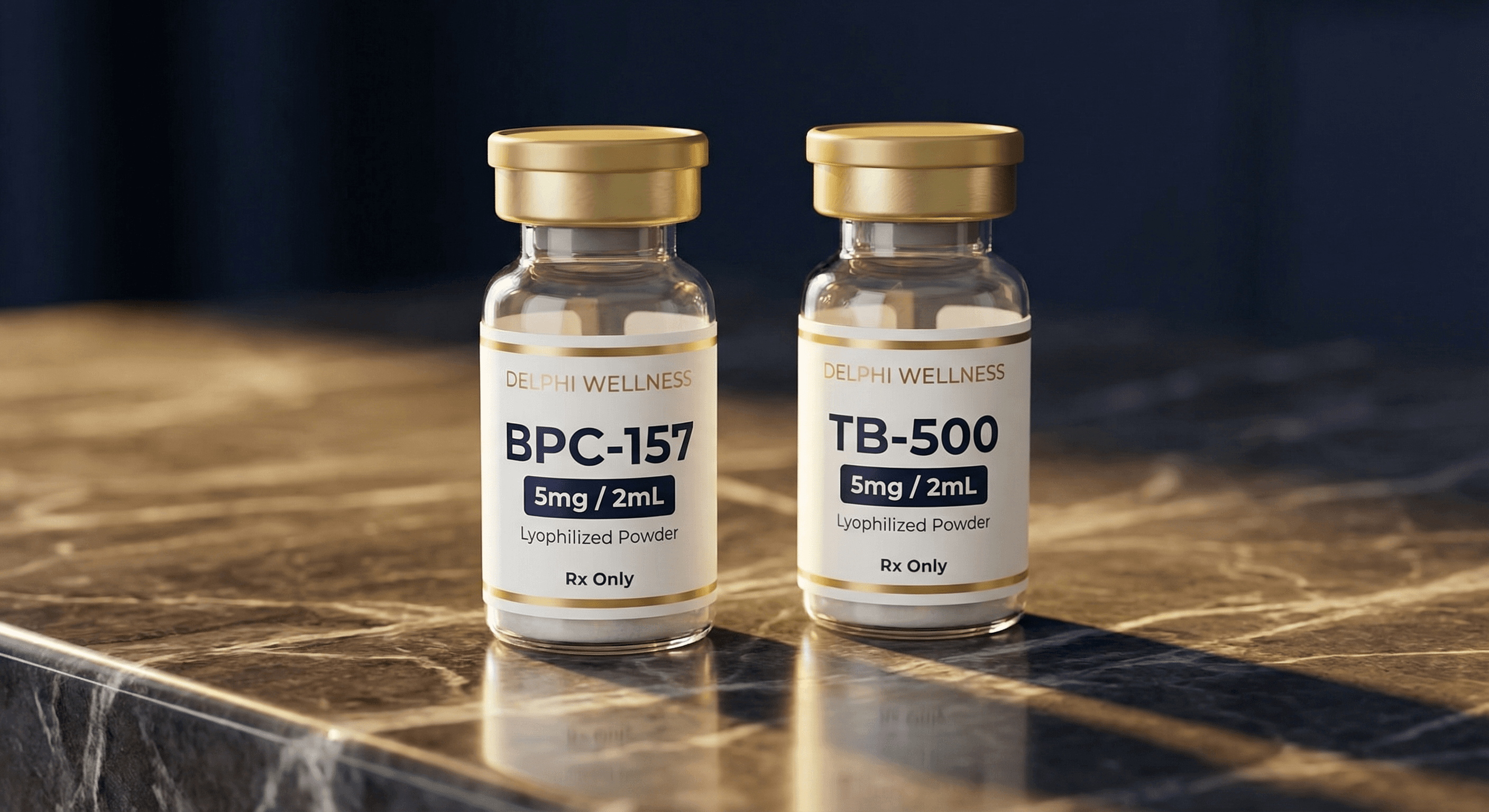
GH supports connective tissue health and repair. Patients with chronic low-grade joint pain, the kind that accumulates after 35 or 40, often notice a reduction in baseline discomfort. For more specific injury healing, we'd typically add BPC-157 or TB-500 to the protocol.
CJC-1295 Ipamorelin Dosing Protocol
The standard clinical protocol is straightforward:
- CJC-1295 (no DAC): 100-200 mcg
- Ipamorelin: 200-300 mcg
- Route: Subcutaneous injection (small insulin syringe)
- Timing: Before bed, at least 90 minutes after your last meal (food, especially carbs and fat, blunts GH release)
- Frequency: 5 nights per week (weekdays on, weekends off)
- Cycle: Typically 8 weeks on, then a break period
Fasting before the injection is important. Carbohydrates and fats limit the peptide's ability to cross the blood-brain barrier effectively, which reduces the GH pulse. Most patients inject right before bed on an empty stomach, which is when your body naturally wants to produce the most growth hormone anyway.
Some patients benefit from a second dose in the morning (fasted, before breakfast or training). This is more common in protocols focused on body composition and performance. We determine this during follow-up based on your results and IGF-1 lab values.
Side Effects of CJC-1295 and Ipamorelin
The side effect profile is mild, which is one of the reasons this combination is so widely used:
- Mild water retention: Some patients notice slight puffiness in the first few weeks. This typically resolves as the body adjusts.
- Tingling or numbness in hands: Occasional, related to GH-induced water retention affecting the carpal tunnel area. Usually temporary.
- Vivid dreams: Common. Not necessarily unpleasant, but noticeable.
- Injection site reactions: Minor redness or bruising. Standard for any subcutaneous injection.
- Increased hunger (rare with Ipamorelin): Because Ipamorelin doesn't significantly affect ghrelin, appetite increases are uncommon. If you were using GHRP-6 instead, this would be a bigger issue.
Serious side effects are rare at clinical doses. However, growth hormone optimization requires monitoring. We check IGF-1 levels (targeting the 200-300 ng/mL range) to ensure you're in the therapeutic window without overshooting. Excess GH over time can contribute to insulin resistance, water retention, joint pain, and carpal tunnel symptoms. Proper dosing and cycling prevent this.
Who Should Consider CJC-1295 and Ipamorelin?
This peptide stack is well suited for:
- Adults over 30 experiencing age-related decline in sleep quality, recovery, body composition, or energy. GH production drops roughly 15% per decade after age 30. By 50, you're producing a fraction of what you did at 25.
- Active individuals who want to optimize training recovery and body composition. This pairs well with a solid training program and nutrition plan.
- People on testosterone therapy who want to add another layer of optimization. GH and testosterone work synergistically. Optimizing both produces results that neither achieves alone.
- Patients interested in longevity medicine and slowing the biological effects of aging. Growth hormone touches nearly every system in the body: metabolism, immune function, tissue repair, cognitive health, and skin quality.
CJC-1295/Ipamorelin vs. Other Growth Hormone Options
vs. Sermorelin: Sermorelin was the original GH secretagogue. It works, but CJC-1295 + Ipamorelin produces a stronger, more reliable GH pulse. Sermorelin is still used, but this combination has become the preferred protocol in most clinical settings.
vs. MK-677 (Ibutamoren): MK-677 is an oral GH secretagogue, which is convenient. But it significantly increases appetite (it's a ghrelin receptor agonist) and causes more water retention than Ipamorelin. For patients who want to avoid injections entirely, it's an option we discuss. For optimal results with fewer side effects, injectable CJC-1295/Ipamorelin is superior.
vs. Pharmaceutical HGH (Genotropin, Norditropin): Pharma HGH is the gold standard for GH optimization, particularly for patients over 50. It's also the most expensive option. CJC-1295/Ipamorelin achieves meaningful GH optimization at a fraction of the cost and with a more physiological release pattern. For most patients under 50, the peptide route is the better starting point.
vs. Tesamorelin: Tesamorelin is an FDA-approved GHRH analogue (approved for HIV-associated lipodystrophy). It's particularly effective for visceral abdominal fat reduction. Some protocols combine Tesamorelin with Ipamorelin instead of CJC-1295. At Delphi Wellness, we choose between these based on your specific goals and lab results.
Getting Started
If you're in Atlanta, anywhere in Georgia, or able to access our telehealth services, and you're curious about whether CJC-1295 and Ipamorelin fits your health goals, the next step is simple. Book a consultation and let's look at where you are, where you want to be, and whether growth hormone optimization makes sense as part of your strategy.
I'd rather have an honest conversation about whether this is right for you than sell you something that isn't. That's just how we do things at Delphi Wellness.
FAQ
How long does it take to see results from CJC-1295 and Ipamorelin?
Sleep improvements are typically noticed within 1-2 weeks. Body composition changes become visible at 8-12 weeks with consistent use, proper training, and nutrition. Recovery benefits are usually apparent within the first month. Full effects develop over 3-6 months of cycling.
Can women use CJC-1295 and Ipamorelin?
Yes. GH optimization is beneficial for both men and women. Women typically start at the lower end of the dosing range (Ipamorelin 200 mcg before bed) and often see dramatic improvements in body composition within 3 months when combined with training and good nutrition. The protocol is adjusted based on individual response and lab values.
Do CJC-1295 and Ipamorelin show up on drug tests?
Both peptides are banned by WADA under the S2 category (Peptide Hormones, Growth Factors, Related Substances and Mimetics). If you're a competitive athlete subject to anti-doping testing, these peptides are not an option. For non-competitive adults, there are no legal restrictions on prescribed peptide use.
Will CJC-1295 and Ipamorelin shut down my natural growth hormone production?
No. This is a common concern, but it's based on a misunderstanding. CJC-1295 and Ipamorelin stimulate your pituitary to produce its own GH. They don't replace it with an external source. Your pituitary continues to function normally. Cycling (periods on, periods off) maintains pituitary sensitivity and prevents receptor desensitization.
Can I combine CJC-1295/Ipamorelin with other peptides?
Yes, and we often do. Common combinations include adding BPC-157 and TB-500 for injury healing (the Wolverine Protocol includes growth hormone secretagogues alongside healing peptides), or adding Tesamorelin for targeted visceral fat reduction. The specific combination depends on your goals, and we design these protocols on a case-by-case basis during your consultation at Delphi Wellness.
Dr. Aren Nilsson, D.C.
Founder & Clinical Director
Dr. Aren Nilsson is the founder of Delphi Wellness, a physician-led telehealth practice specializing in hormone optimization, peptide therapy, and functional medicine for patients in Georgia.
Learn more about our teamRelated Articles


Ready to optimize your health?
Get your free consultation with our clinical team.
Get Your Free Consultation →